I know I mentioned the new rooster, Stewart, but I don’t think I put up a picture of him so….Enjoy!
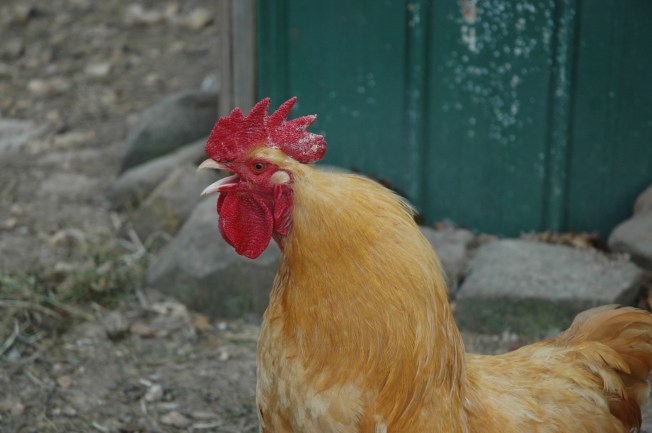

Donna.
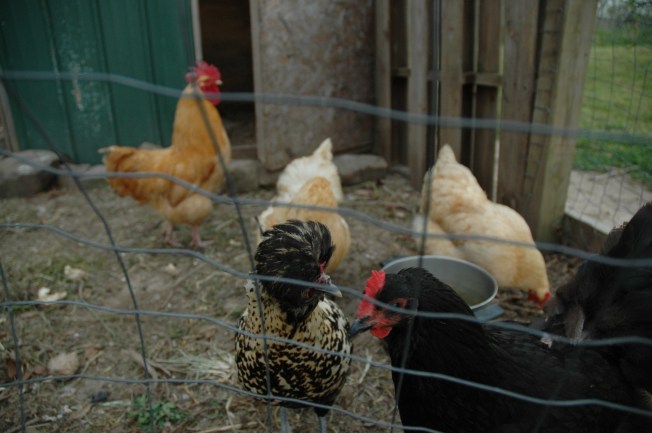


I know I mentioned the new rooster, Stewart, but I don’t think I put up a picture of him so….Enjoy!
Donna.
Everybody does right? Well, I’m here to introduce you to the world of herb gardening. Herb gardening is at least as old as the earliest civilizations. In every age and in every part of the world herbs have been valued in cooking, medicine and the preparation of fragrances.
Okay, okay, that’s nice….but what is an herb? An herb is a plant or plant part used as an ingredient for flavor, fragrance or healing. Not to be confused for a spices, which are tropical in orgin. With spices we use the plants root (ginger), fruits (vanilla pods), flowers (cloves), seeds (pepper), or bark (cinnamon).
Herbs do well in pots inside and out. Herbs are easy to dry and chop up for your own dry herb needs. Children like herbs a lot too. If you are interested in any “kindergardening” ideas, and herb garden is a great one. Herbs arouse kids’ curiosity and interest because they thoroughly engage the senses. You touch the rosemary and your hand smells like rosemarry, the mint smells like mint, the snozzberries….any way, herbs are cool!
Culinary Herbs:
Basil Chives
Garlic Oregano
Rosemary Dill
Mint Parsley
Sage Thyme
Tarragon Summer savory
Fragrant Herbs:
Bergamot Geranium
Iris Florentina Lavender
Lemon Balm Rose
Medicinal and Decorative Herbs:
Chamomile Comfrey
Feverfew Wormwood
I started and herb garden last year. It is located in my backyard, close to my creek and it receives mostly full sun. Ideally, kitchen herb gardens are located close to your kitchen as possible, for the convenience in cooking. I started out with three rosemary plants (which have all died), some strawberries, mint, lemon balm, echinacea, and two kinds of oregano. This season, my herb garden has gone through a massive construction, and if you live in the NWA, please come by and see it, it will be a force to be reckoned with! Some new additions include chives, carrots, chard, onions, flat leafed parsley, garlic, lavender, two kinds of basil and some red curly lettuce. I know what some of you may be thinking, some of those things are not herbs. I know that, it’s an experiment. I have the room and the will, you should give it a shot for yourself some time. Now that I have my herb garden in some sort of shape I’m all excited. It’s my pet this year.
These pictures were taken three days ago. I have since pulled out more of the rocks to create more patches for edibles.

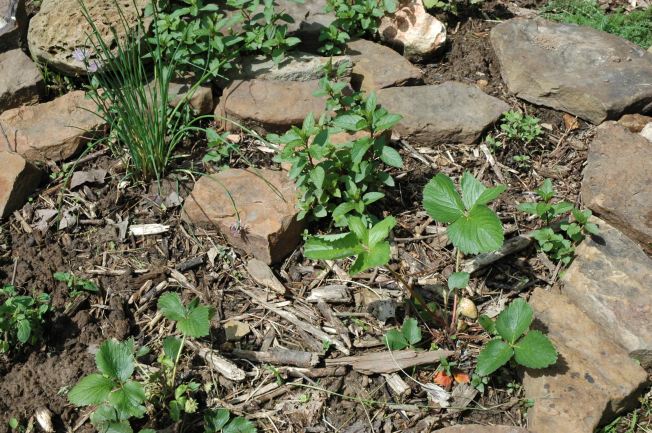

Strawberries
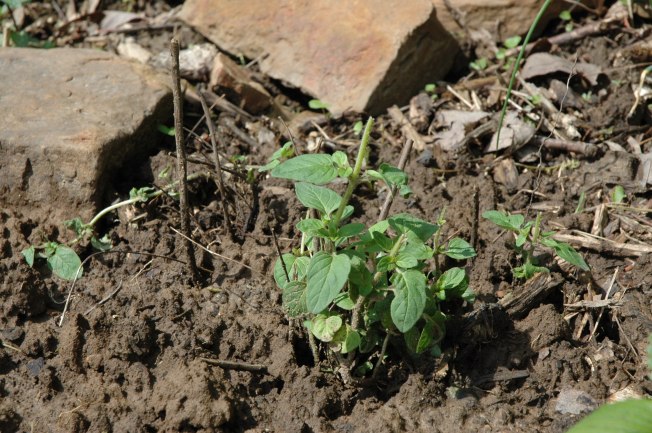
Oregano
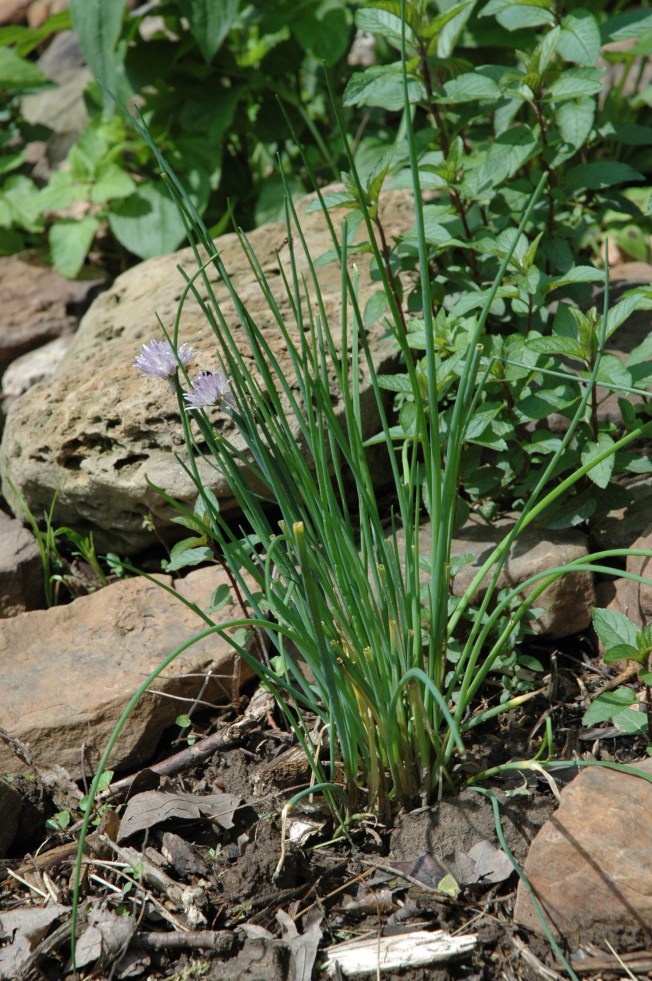
Chives

Mint galore, which I pulled out today and removed some of those rocks. Don’t plant mint in the ground if you don’t want it to take over, because it will. I don’t mind that, because it fills in gaps for me.
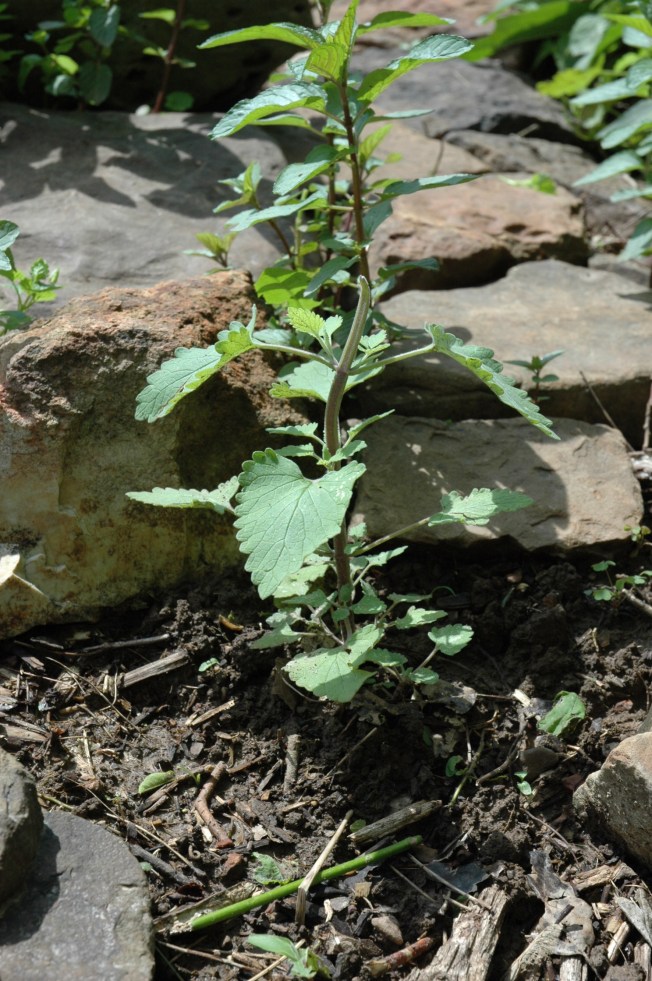
Catnip, or Cat mint
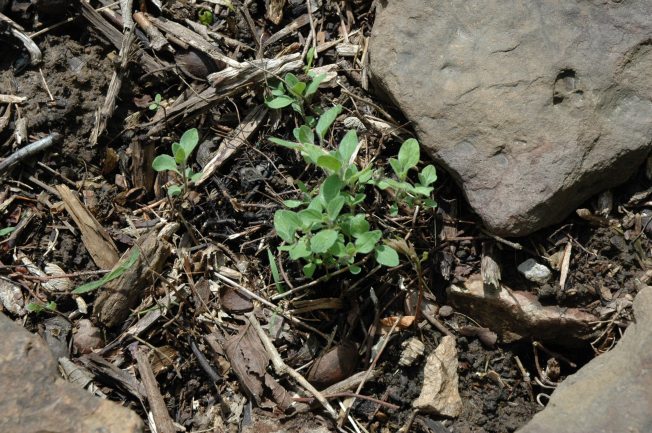
The “other” Oregano. This is Greek Oregano, which is delicious!

Lemon Balm

Echinacea
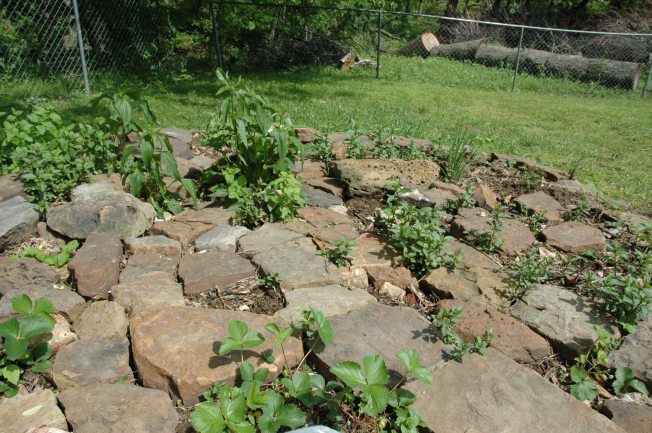
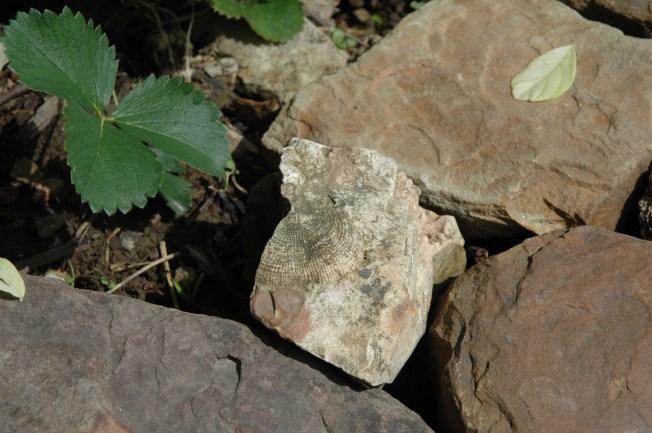
We find a lot of fossils here, so I like to incorporate them into the mix.
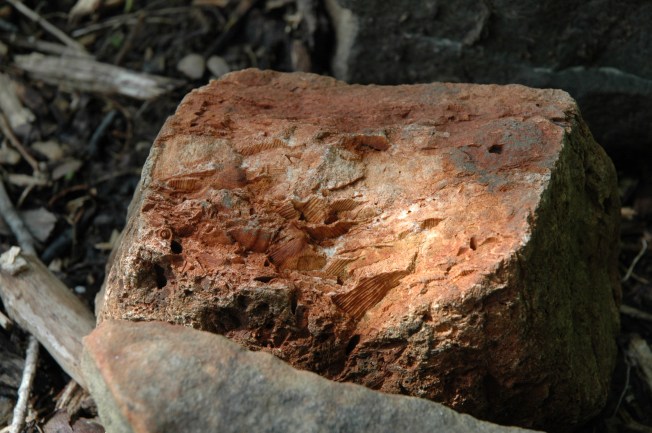
More fossils.

Still more…

Red curly lettuce.
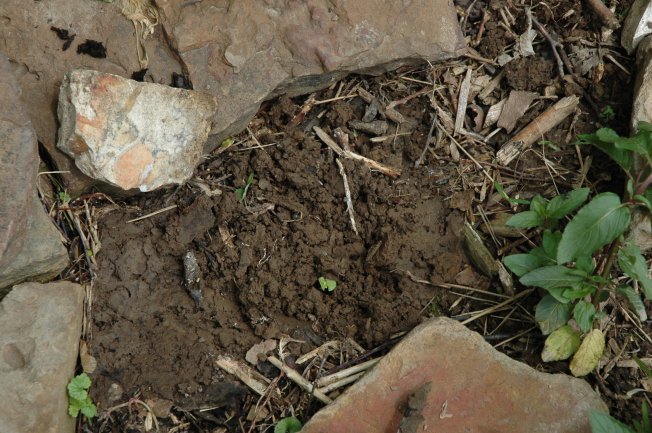
Basil.
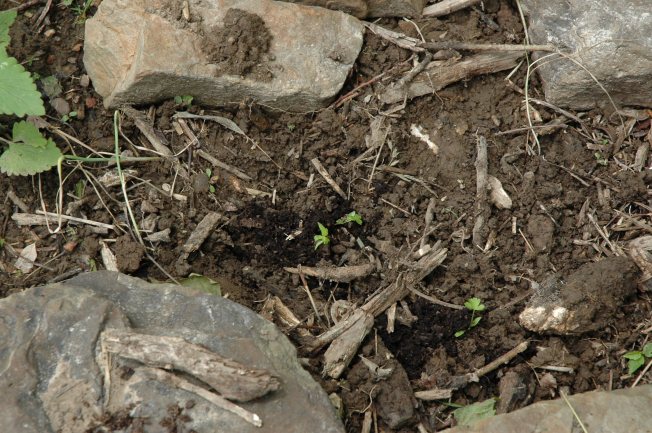
Flat leaf parsley.
So yeah, Herb Gardening! Go tell your friends.
Many days ago, say three weeks? Giant holes were dug and tomato plants were added. How about that!

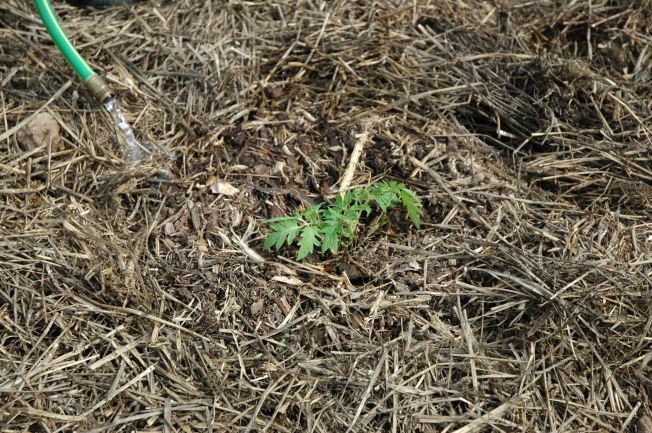

Our potatoes.
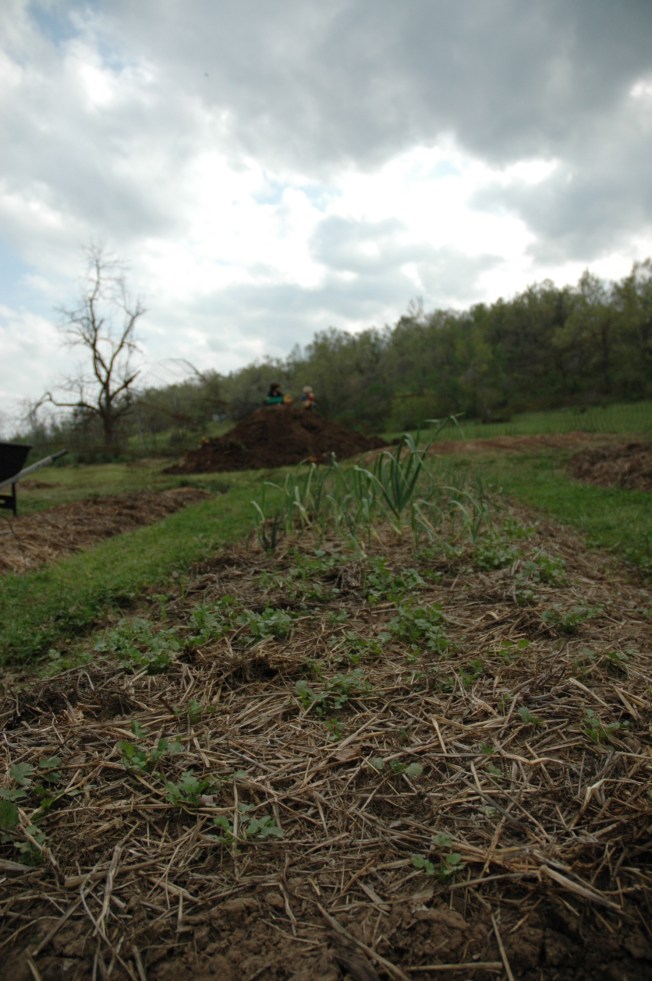
My onions and cilantro, which is going crazy! So if you live in the NWA, come and pick some, thank you.

Strawberry/Garlic patch.

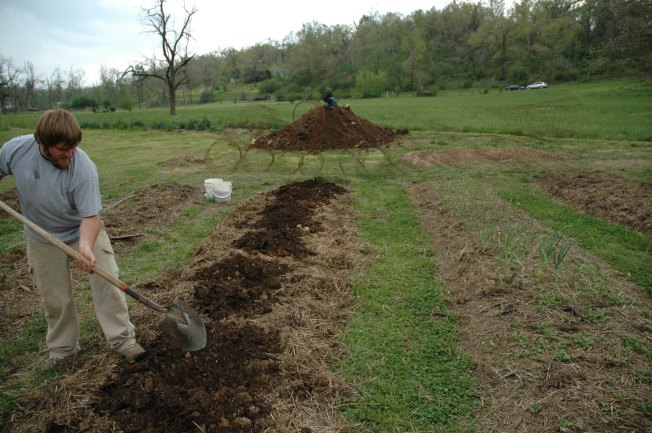
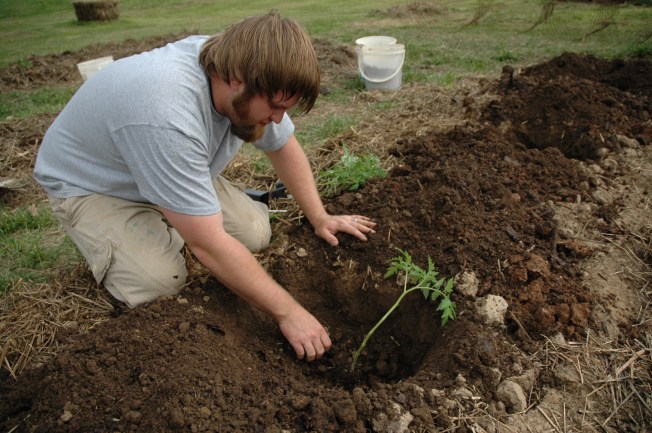


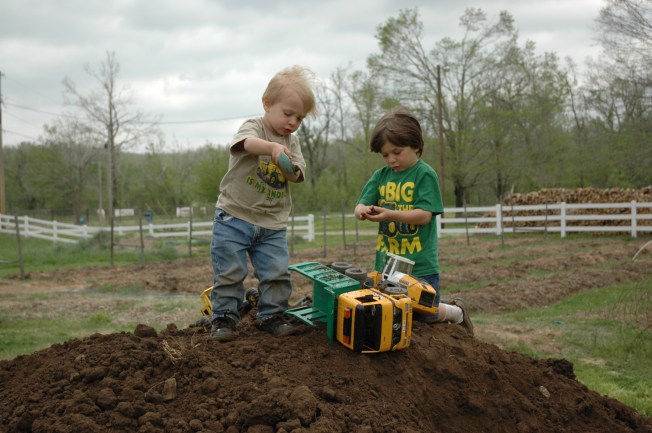
We (I say “We”, but I mean Paul and Josh) are adding 1000 more sqft. to the garden. These extra rows are for watermelons and pumpkins. The dumptruck came and dumped some dirt and my children had a hayday.


Our chickens doing their thing.
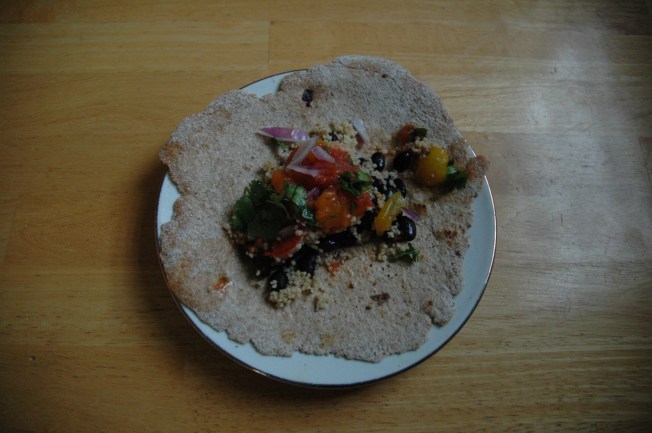
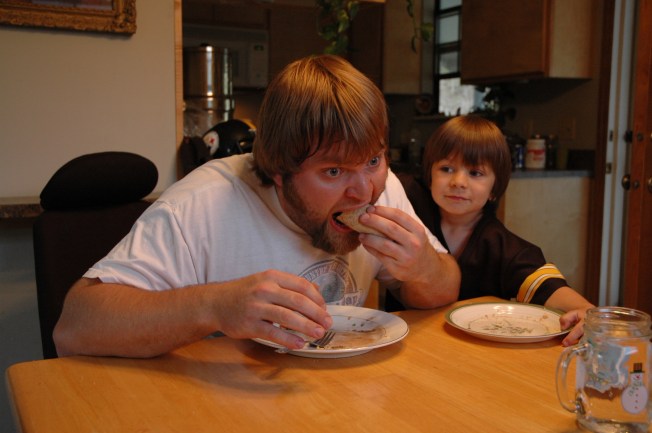
This is how we like to eat out here on the “farm”. Homemade tortillas, organic black beans and couscous, homemade salsa, with fresh cilantro from the garden. My kids asked for seconds!


Have a good one!
1. Protect our Food Supply:
2. Reduce oil consumption used to transport food thousands of miles to market.
3. Supports and strengthen local economies all across the U.S.
4. Healthier choice:
5. Environmental issues:
Why is it these days that we would rather wait 30 minutes in a restaurant for a frozen and reheated meal, than to stand in our kitchens and prepare a wholesome meal for our families? Why is it that no one enjoys to cook these days? Why is it that obesity is such a problem? Hmmmmmm….I don’t think that it’s that hard to figure out if you just look to the past for a little information. I read once in a magazine “If your grandmother didn’t eat it, than you shouldn’t eat it.” There was an accompanying picture of an old cartoon granny holding a limp tube of yogurt product. It totally makes sense. Back then, people didn’t have food products to eat, they had food, that they grew and cooked themselves. Was obesity or diabetes a problem? No. Nowadays, corporations have taken over our food suppy and stuff all sorts of food science in a box for you to consume at the dinner table. What’s in it you say? Try to pronounce it, can’t? Than throw it away. I’m posting a few easy recipes that I want you to try, Whole whet tortillas, which I’ve put up before and a vegan carrot cake, that is too delicious for words. I hope you give them a shot.
Whole Wheat Tortillas
2 cups of whole wheat flour
1 tsp baking powder
1/2 tsp salt
2 tbs olive oil
1/2 cup-3/4 cup warm water
Combine dry ingredients, add oil and stir. Add water 1tbsp at a time until dough can be gathered into a ball. Knead dough 15-20 times on a floured surface, then let rest for 15 minutes. divide into 10-15 smll balls, roll out into circles. Cook on an ungreased skillet over medium-high heat. Cook 30 seconds per side.
Vegan Carrot Cake
2 1/4 cups flour
2 tsp baking soda
2 tsp cinnamon
1 tsp allspice
1 tsp baking powder
1 tsp salt
3/4 cup brown sugar
2 bananas
1 tsp vanilla
1 cup oil
2 grated carrots
1 can crushed pineapple
1 cup shredded coconut
rasins or nuts
mix everything together (dry ingredients first), bake @ 350 degrees for 35-45 minutes.
Frosting
(You can use regular cream cheese if you wish)
1 pkg. vegan cream cheese
1 tsp vanilla
1/3 cup soy margarine
3/4-1 cup powdered sugar
Beat together, and frost the cake.
We received a new rooster today via the Lamascus-Emerson crew. He seems nice. We named him Stuart. He’s gold and quite large. Perry was a bantam variety and a whole different shape in general. When Stuart crows, he sounds like he’s saying “coc-a-doodole-doo” which is quite amusing. It’s just weird to have another man around.



Paul and I told Oliver about the rooster’s demise today. Last night I was worried about telling him the truth, because he’s such a sensitive soul, but we came clean and told him. As expected, he didn’t take it so well and couldn’t understand why a dog would come and do that. It was three dogs, and we told him that Perry did the best he could to protect his ladies. Oliver cried about it for about a half an hour and then decided he needed to talk it out. So we spent a while talking about death and how it’s a part of life. We left Perry under the tree all day today, he’s still there now as a matter of fact, I don’t know what we’re waiting for….but, yeah. After a while, Oliver wanted to go outside and see Perry. So we held hands and I walked him out there to take a peek. He was quiet and gave him a good look. I asked him if he wanted to say anything to Perry and he declined. We went back inside. After another chunk of time passing, Oliver got a little chocked up and said “now the chickens won’t have anyone to protect them!” He’s such a thoughtful young man.
 2greenthumbs's Weblog